


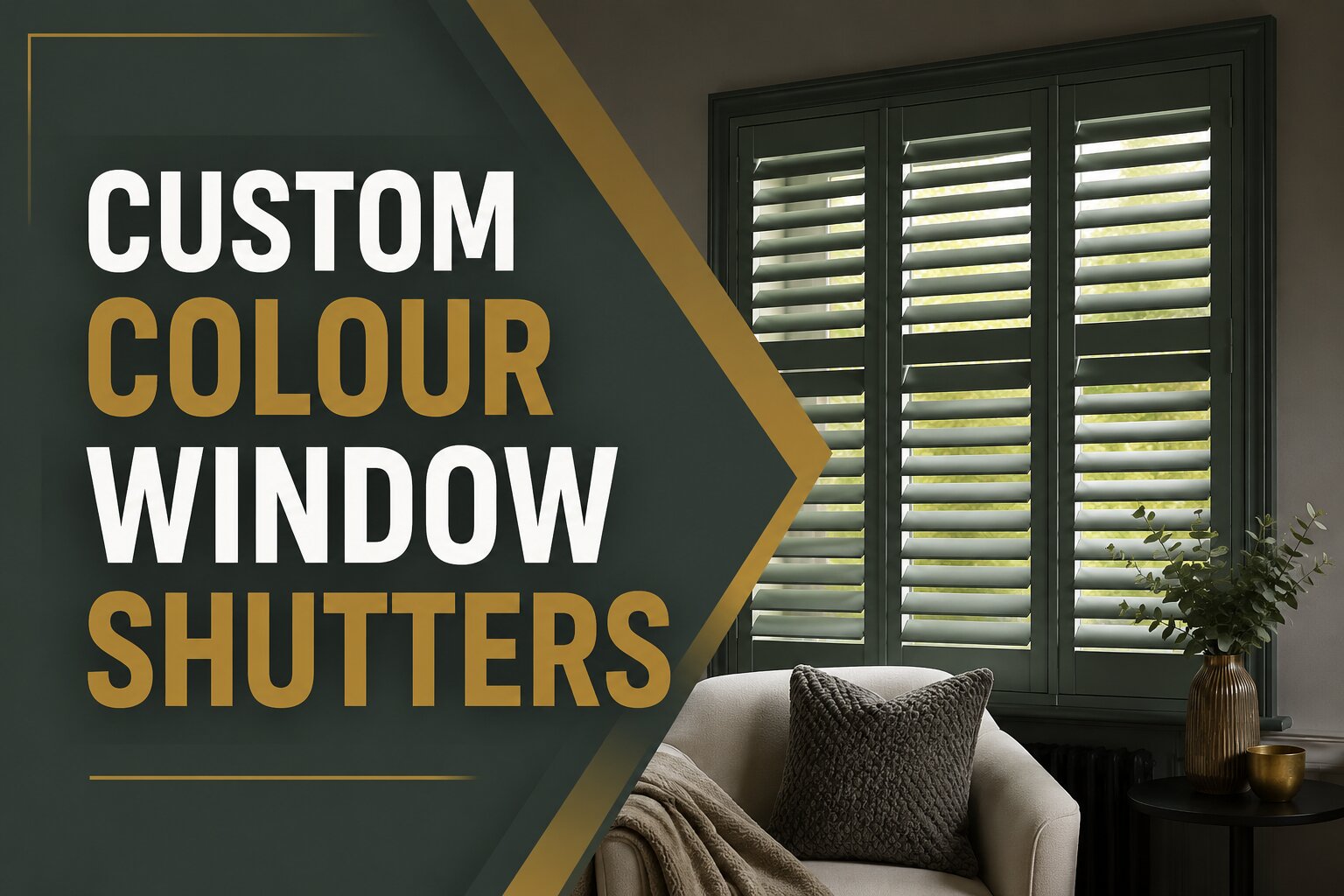

Custom colour shutters let you go far beyond standard white — choosing from painted, stained, matte, satin, or gloss finishes in virtually any colour. The right finish depends on your room’s light direction, existing joinery, and how much fingerprint abuse your windows take on a daily basis. Always test physical samples in your own home before committing.
White shutters are lovely. Genuinely. But if you’ve ever stood in a room full of them and thought, “this feels a bit clinical,” you’re not alone. The good news is that shutters come in far more than brilliant white — and getting the colour and finish right can completely transform a space. Whether you’re after a deep slate grey, a warm oak stain, or something a little bolder, custom colour shutters in the UK are far more accessible than most people realise.
This guide covers everything from what “custom” actually means in the shutter world, to the matte vs satin debate, to the very real danger of choosing a white that clashes horribly with your skirting boards. We’ve been fitting shutters and blinds across Essex for over 50 years, so there’s plenty we’ve seen go right — and a few things we’ve seen go spectacularly wrong.
What are custom colour window shutters?
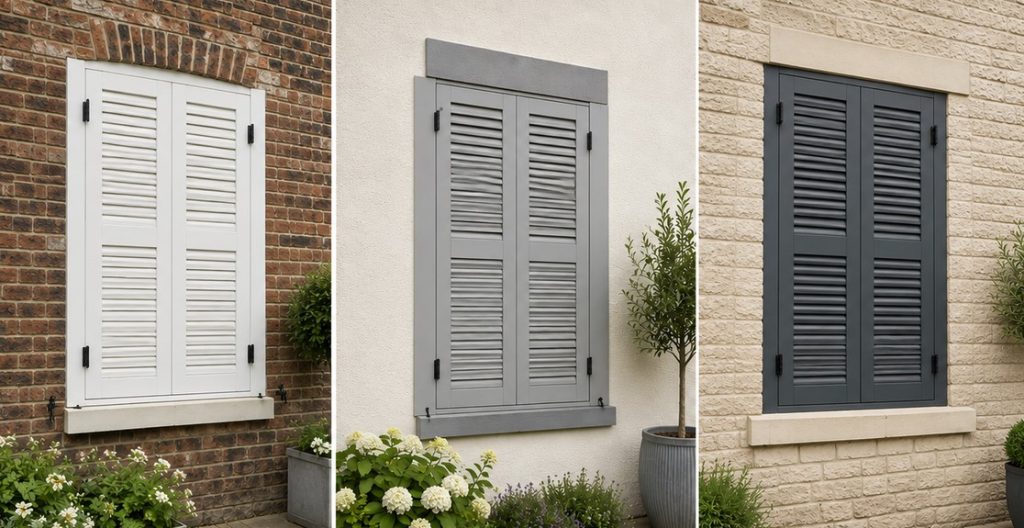
Custom colour shutters means going beyond the standard whites and creams — either by selecting from an extended colour palette or ordering a bespoke colour match to a specific paint reference, such as a Farrow & Ball shade or a RAL code.
“Custom” is a word that gets stretched a lot in home interiors. With shutters, it usually means one of two things: choosing from an extended palette, or ordering a precise colour match. Most quality shutter ranges offer a solid standard palette — typically 20 to 30 colours spanning whites, greys, taupes, and natural wood stains. Custom finish shutters go further, allowing you to match your shutters to your kitchen cabinetry, your hallway paint, or that very specific “not quite taupe, not quite grey” tone you’ve been obsessing over.
One thing worth knowing upfront: bespoke colour matching is almost always available on hardwood shutters, but not necessarily on composite or faux wood options. It’s something we can talk you through properly when we come to measure up.
Shutter finishes UK: what are your options (and why they matter more than you’d think)?
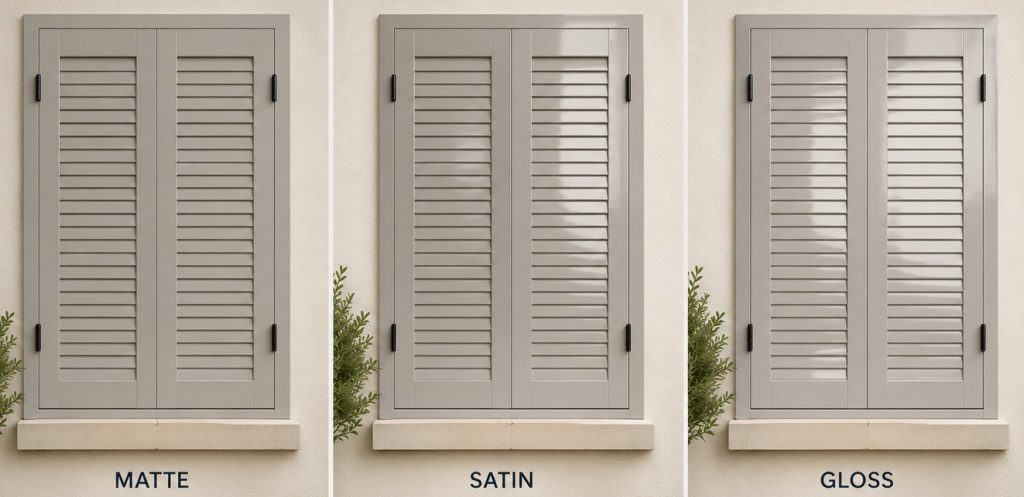
The finish — the surface quality of the paint or stain — has a huge bearing on how your shutters actually look and live day to day. Colour gets most of the attention, but the finish is what you’ll notice every time you catch the light at an angle.
Painted finishes are the most popular by far. They give a clean, consistent result and are available in the widest colour range. Most painted shutters are factory-finished with specially mixed, anti-fade paint — a significant step up from anything you’d apply yourself.
Stained finishes let the natural wood grain show through, creating warmth and texture that painted shutters can’t quite replicate. They’re brilliant in rooms with exposed timber, natural stone, or a generally “organic” aesthetic. Think Scandi-inspired living rooms or country kitchens.
Matte vs satin vs gloss is where a lot of people get tripped up. Here’s the practical breakdown:
- Matte looks sophisticated and hides minor marks and fingerprints well. Great for living rooms and bedrooms. Less easy to wipe down.
- Satin is the sweet spot for most rooms — a gentle sheen that’s easy to clean without looking like a bowling ball. Our most recommended finish for kitchens and bathrooms.
- Gloss is bold and reflective. Looks fantastic in period properties or maximalist spaces, but every grubby fingerprint will absolutely show up.
If you’ve got young children or a particularly enthusiastic dog, satin is probably your friend.
Choosing the right colour without falling into the “almost white” trap
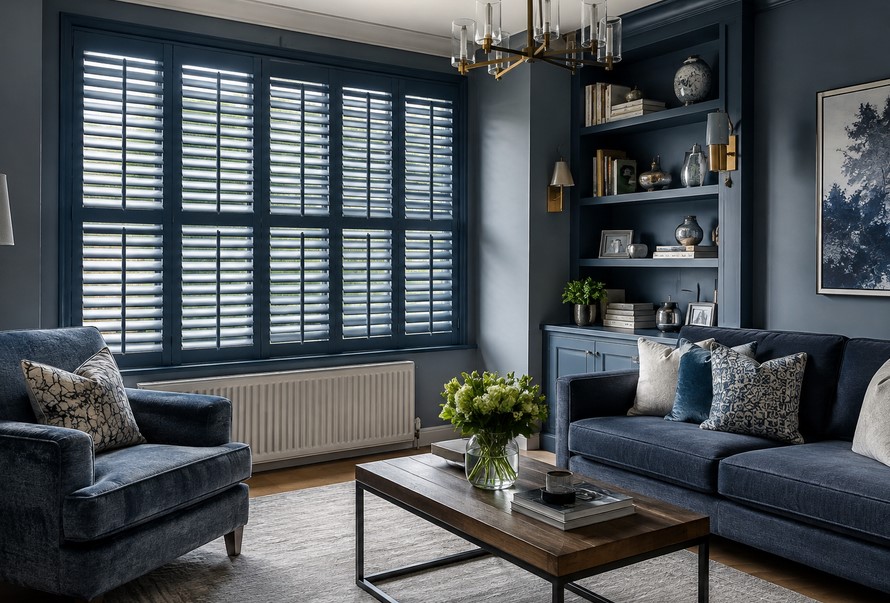
The most reliable starting point when choosing a shutter colour is your existing joinery — your skirting boards, architraves, and internal door frames. Match your shutters to those and the result will look deliberately designed rather than just added on. Ignore them and you risk the most common shutter colour mistake of all: a white that’s almost right, but not quite.
Here’s something we see often: someone orders a white shutter, it arrives, and it looks subtly wrong against the skirting boards. Not wrong enough to send back, but just slightly off. The culprit is almost always undertone.
Pure white has a cool, crisp quality that works beautifully in modern new-builds with bright white joinery. Off-white has a neutral-to-warm undertone that suits a much wider range of properties — period homes, Victorian terraces, rooms with natural materials. Cream is warmer still, with a visible ivory cast that can look wonderful in a cottage setting but dated in a contemporary kitchen.
In 2026, there’s also a clear move away from stark white toward warmer neutrals — putty tones, soft sage, and muted greiges are increasingly popular choices for UK homes, particularly where natural materials like stone flooring or limed oak joinery are already part of the scheme.
The single most reliable test? Hold a physical colour sample against your skirting boards in daylight. Not on your phone screen. Not in a brochure. In your actual room, in your actual light. Morning and afternoon light can make the same shade look noticeably different, so test at both times if you can.
When colour-matching to walls or cabinetry, the same rule applies. If your kitchen’s got warm oak worktops and dark green units, a cool bright white shutter will fight with everything. A warm off-white or even a soft sage will tie the room together far more naturally.
Room-by-room ideas for custom finish shutters
Living rooms
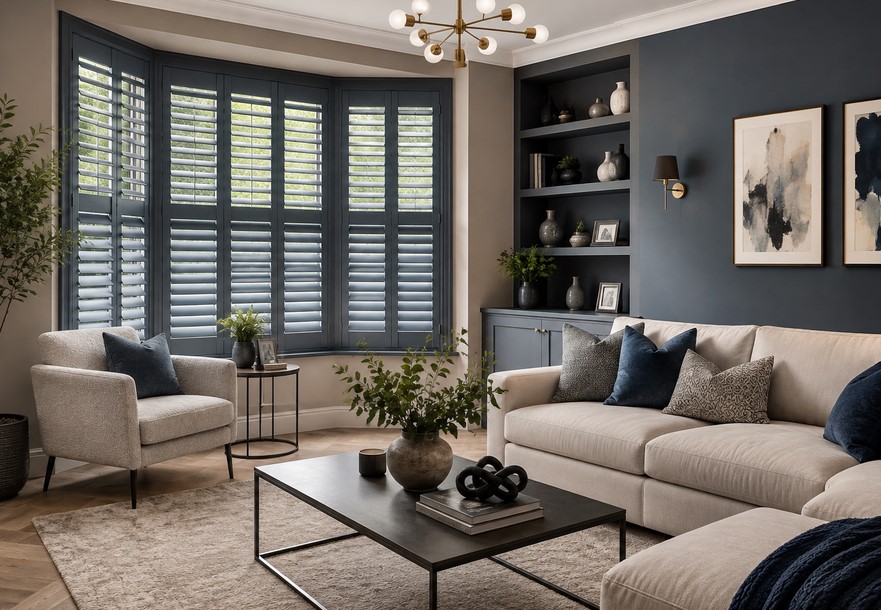
This is where you’ve got the most creative freedom. Neutral palettes — warm greys, off-whites, taupes — are timeless and photograph beautifully. The chosen colour should complement existing window frames and the overall style, or deliberately add contrast for more impact. But if you want a talking point, a deep navy or forest green shutter on a bay window is genuinely stunning.
Darker painted window shutters can impress without overwhelming the room when the rest of the scheme is restrained. Statement colours tend to work best in rooms where the rest of the palette is relatively restrained. Stained finishes that show the real timber can work beautifully in a classic living room scheme and suit homeowners with a more natural taste.
Bedrooms
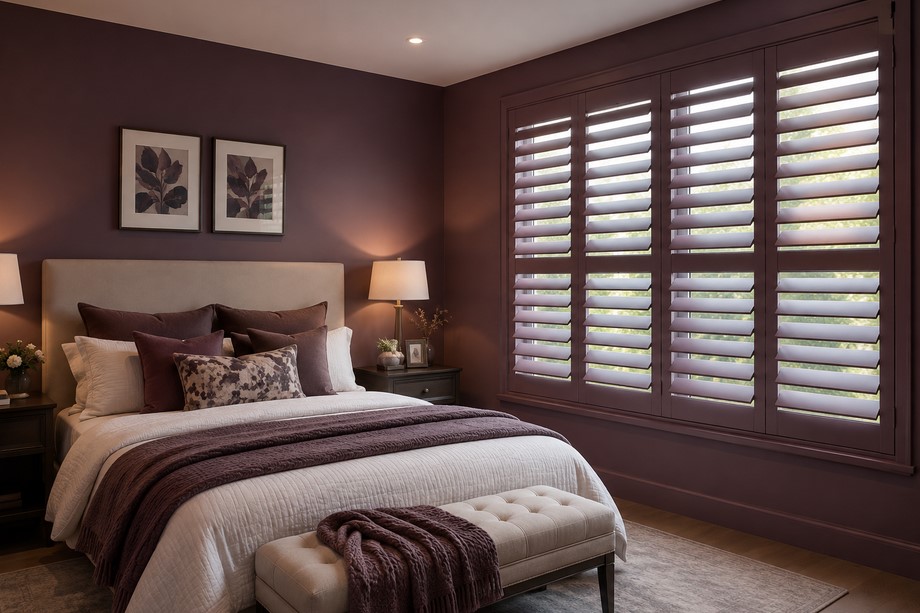
Calm and restful is usually the brief. Soft off-whites, warm linens, and muted greiges all work brilliantly to create the calm mood people want to achieve in bedrooms. In a south-facing room, slightly darker shades can help manage the light without needing blackout lining. Worth noting: if you opt for a darker colour, consider a larger louvre blade (76mm or 89mm) so you can operate the adjustable louvres to balance daylight and privacy when the slats are open.
Kitchens
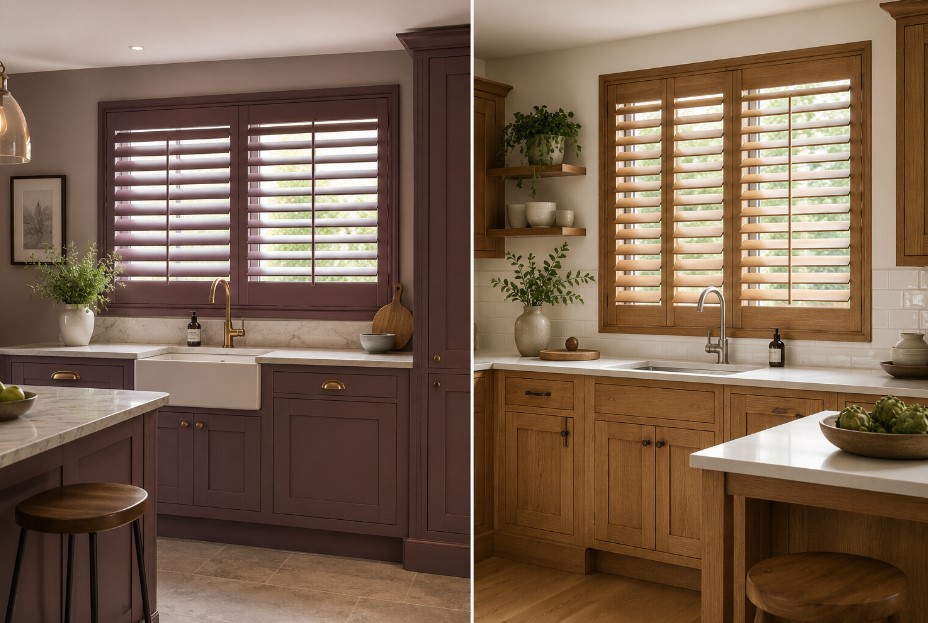
Satin finish, full stop. Painted finishes are popular here, but waterproof PVC shutters are often the more suitable choice for kitchens and bathrooms where moisture and daily wipe-downs are a concern. Kitchens get steam, grease, and fingerprints — you need something durable that you can wipe down quickly. Colour-wise, match your shutters to your cabinet colour or your worktop undertone. White shutters alongside white cabinetry look sharp; wood-stained shutters next to oak units look cohesive and considered. The finish should suit your existing palette while helping protect against kitchen moisture and wear.
Bathrooms
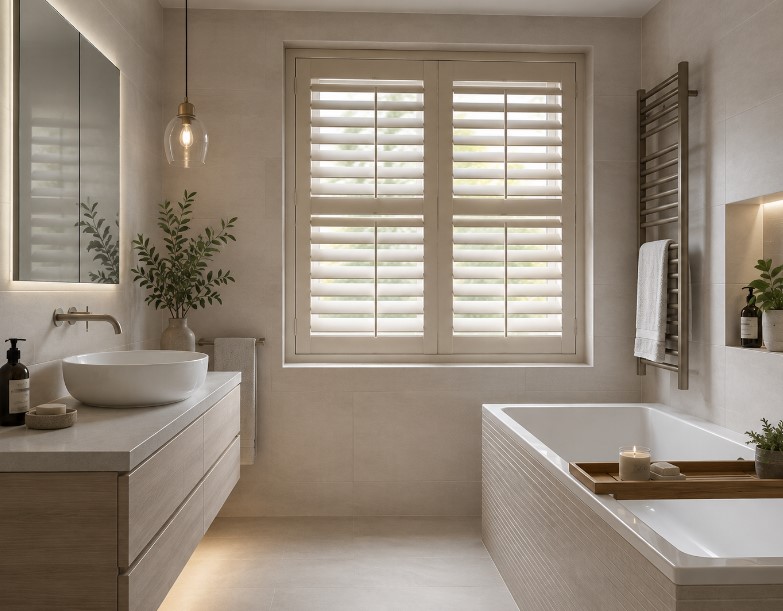
Moisture resistance is the priority here, which affects material choice as much as colour. Composite and faux wood shutters hold up far better in humid environments than solid hardwood. Satin finishes are again easiest to keep clean. Pale colours tend to work best in smaller bathrooms — they keep the room feeling open.
Home offices
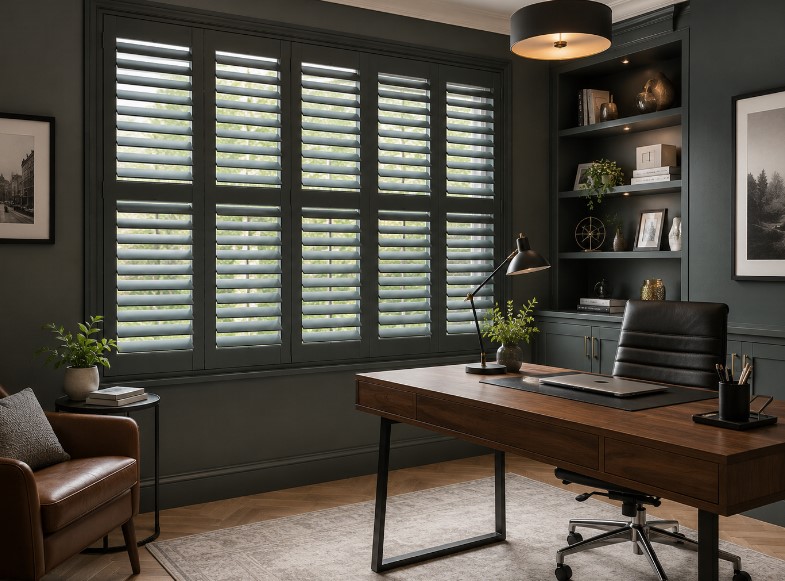
A matte finish in a calm neutral reduces glare and keeps the room feeling professional. If you’re on video calls regularly, shutters that control light direction without blocking it entirely are worth their weight.
Practical things to know before you commit
A few things people don’t always think about until it’s too late:
UV fading. Quality factory-applied finishes include UV protection, but very dark colours in south-facing windows may show very gradual fading over many years. Painted finishes can still last around 5–10 years outdoors with proper care, so indoor shutters usually see less demanding exposure. It’s not a dealbreaker, but worth knowing.
Semi-transparent stained finishes generally need recoating every 2–4 years in more exposed conditions.
Lead times. Custom finish shutters are made to measure, and bespoke colour matching takes time. Build in 6–8 weeks from order to installation, sometimes longer. This isn’t a last-minute purchase.
Cost. Standard palette colours are typically no more expensive than white. Bespoke RAL or paint-matched finishes often carry a small surcharge — usually per colour, not per shutter. Please note we’ll be upfront about this when we quote.
A quick guide to getting the best colour match result (our process)
Getting the colour and finish right is much easier when you can see samples in your own home rather than on a screen. That’s exactly how we work — we’ll come to you, take proper measurements, and bring physical samples so you can compare colours against your actual walls, flooring, and joinery in your actual light.
We’re a registered Luxaflex dealer, which means we’ve got access to a wide range of finishes and materials that aren’t always available through general retailers. Our team will talk you through what’s achievable within your chosen product range, flag anything that might affect lead times, and give you a clear, honest quote before anything’s ordered. There’s no pressure, no jargon — just straightforward advice from people who’ve been doing this for over 50 years.
If you’d prefer to browse first, you’re welcome to visit us at our showroom. Seeing shutter finishes and colours in person, rather than on a screen, makes a real difference when you’re deciding between similar shades.
Common mistakes we see (so you can avoid them)
- Picking a white that clashes with your trim. See above. Sample first, always.
- Going full gloss in a busy household. Beautiful in the showroom, a magnet for marks at home.
- Choosing a trendy colour without thinking about the rest of the room. A shade can look perfect on its own but still feel wrong for the wider property if it ignores adjoining rooms or joinery. Dusty pink shutters in a room with beige walls and grey carpet rarely ends well.
- Skipping professional measuring. Plantation shutters are made to your exact window dimensions. A measurement error means a remade order and a delay.
- Ignoring light direction. A north-facing room calls for lighter, more reflective shades. A sun-drenched south-facing room can handle deeper tones.
Frequently asked questions
Are custom colour shutters available in the UK, and do they cost more?
Yes — custom colour shutters in the UK are widely available through specialist suppliers. Standard palette colours typically cost no more than white. Bespoke colour matching (to Farrow & Ball, RAL, or Dulux references) usually carries a small surcharge, confirmed before you order.
What are the most popular shutter finishes in the UK right now?
Satin-finish painted shutters dominate, across both neutral and statement colours. Wood stain finishes are increasingly popular in rooms with natural materials. Matte finishes are growing, particularly in bedrooms and living rooms where a softer, less reflective look is the goal.
Can you colour-match shutters to my wall paint or kitchen units?
In most cases, yes — particularly on hardwood shutters. We can match to major paint brands and RAL codes. We’ll advise on the best approach when we visit to measure up.
Is a matte or satin finish better for shutters?
It depends on the room. Satin is more practical in kitchens, bathrooms, and hallways — easier to wipe clean and better at handling moisture. Matte looks softer and hides marks better in low-traffic rooms like bedrooms and sitting rooms. For rooms that see a lot of use, satin is the more forgiving choice.
Which finishes are easiest to clean in kitchens and bathrooms?
Satin is the easiest to maintain in high-moisture, high-traffic areas. Avoid matte finishes in kitchens — they’re harder to wipe down effectively and tend to mark more visibly over time.
How long do custom finish shutters take from order to installation?
Typically 6–8 weeks from confirmed order to fitting, depending on the finish and material. Bespoke colour matching may add a week or two. We’ll give you a realistic lead time when you order.
Do darker shutter colours make a room feel smaller?
They can, in smaller rooms with limited natural light. In a generously sized room or one with good light, darker shutters add drama and depth rather than making it feel enclosed. We’ll always flag this if it’s a consideration for your space.
Can I see samples before choosing a custom colour?
Absolutely. We always recommend seeing physical samples in your own home, under your own lighting, before making a final decision. It’s the single best way to avoid colour regret.
Should I choose the same shutter colour throughout my home?
There’s no rule that says you must. Many homeowners opt for a consistent white or off-white on front-facing windows for kerb appeal, then choose warmer tones or wood stains in rear-facing rooms. The most important thing is that each room’s shutters relate to that room’s existing joinery — not that every room matches every other.
Does the louvre size affect which colour I should choose?
Yes — it’s worth thinking about together. Darker colours absorb more light, so if you’re going for a deeper shade, a larger louvre (76mm or 89mm) helps ensure enough natural light can still enter the room when the slats are open. Lighter colours are more forgiving and work well with the popular 63mm louvre size.
Will my shutters yellow or fade over time?
Quality factory-finished shutters include UV-protective coatings, so significant yellowing shouldn’t be an issue with reputable products. Very dark colours in south-facing windows may show subtle fading over many years, but this is gradual and affects all window treatments to some degree. We only supply products from trusted manufacturers — it’s something we’re happy to talk through when you’re choosing a finish.
Ready to explore your options?
Whether you know exactly what you want or you’re staring at seventeen paint swatches and feeling overwhelmed, we’re here to help. We’ve been supplying and fitting shutters and blinds across Southend-on-Sea, Westcliff-on-Sea, Leigh-on-Sea, Chalkwell, Rayleigh, Basildon, and the wider Essex area for over 50 years. As a registered Luxaflex dealer, we have access to a wide range of finishes and colours — and we’ll bring samples to you.
Get in touch with our team via phone or drop us an email to book a measuring visit or talk through your options. No hard sell, no obligation — just honest advice from people who genuinely love a good shutter.
