


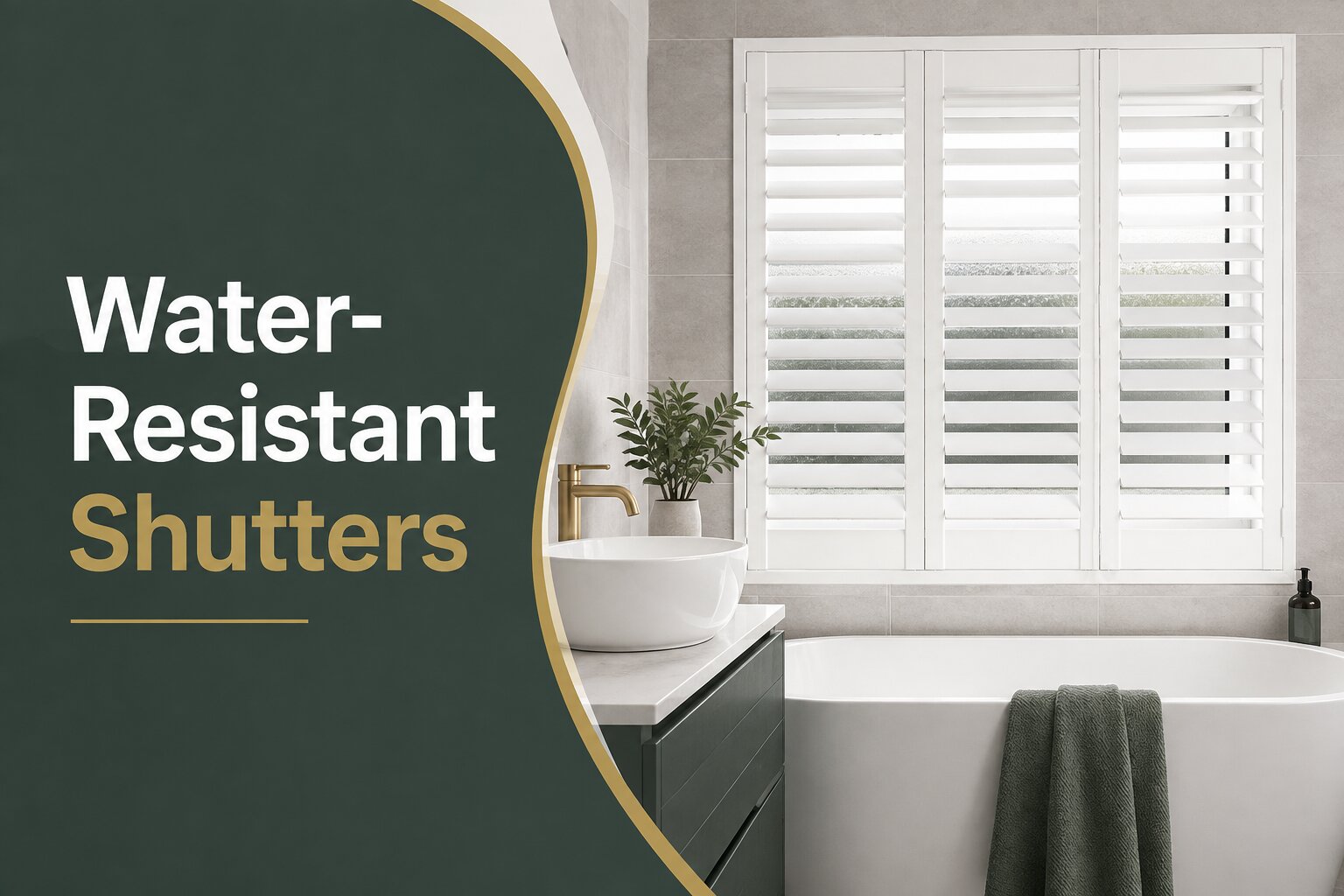

Quick answer: Water-resistant and waterproof shutters—made from materials such as PVC, faux wood, and marine-grade ABS plastic—are the most practical window covering for kitchens, bathrooms, and wet rooms. They resist warping, mould, and rust while providing privacy and light control. Material choice depends on how much direct moisture the shutters will face.
Steam. Splashes. That familiar cloud of condensation that appears every time someone runs a hot bath. Humid rooms are a fact of life in most British homes—and they’re notoriously brutal on window coverings that weren’t built for them. Fabric blinds go limp, wood warps, and paint peels faster than you can say “mould problem.”
Shutters, on the other hand, are one of the smartest choices you can make for moisture-prone spaces. But not just any shutters. The material matters enormously, and the difference between “water-resistant” and “waterproof” is wider than people think. At Art Blinds, we’ve been fitting shutters in Essex homes and across the surrounding areas for over 50 years—and we see the results of good (and not-so-good) material choices regularly.
This guide covers everything you need to know about choosing shutters for kitchens, bathrooms, and wet rooms: materials, finishes, styles, maintenance, and a few things worth knowing before you buy.
Why moisture changes everything
A standard living room is predictable. A kitchen or bathroom is not. Steam from a shower, condensation on cold windows, splashes near the sink, cooking vapour drifting across to a window above the hob—all of these create conditions that standard window coverings simply aren’t built to handle.
The problems are predictable too. Untreated wood absorbs moisture and swells. Paint bubbles and peels. Cheap hinges rust. Fabric goes musty. Over time, you’re not just looking at an ugly window—you’re looking at a mould risk.
The good news is that shutters designed specifically for high-humidity environments avoid all of these issues. The key is choosing the right material for your specific room and, crucially, knowing where in the room the shutters will sit.
What “water-resistant” really means (and what it doesn’t)
These two terms get used interchangeably, but they’re not the same.
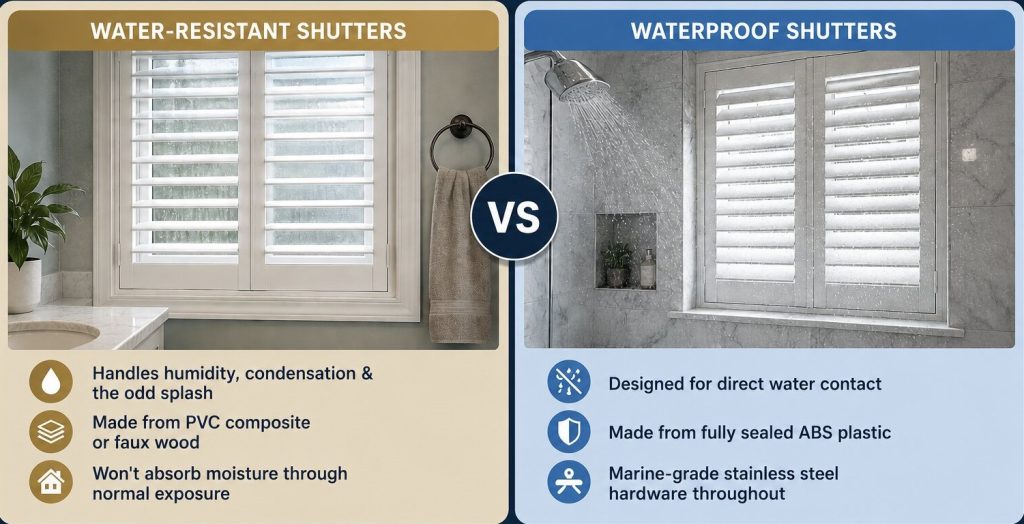
Water-resistant shutters can handle humidity, condensation, and the odd splash—which covers most bathroom and kitchen windows comfortably. They’re built from materials like PVC composite or faux wood that won’t absorb moisture through normal exposure.
Waterproof shutters go further. They’re designed for direct water contact—think a shower head that points towards a window, or a wet room where water sprays freely across a wide area. These are made from fully sealed ABS plastic with marine-grade stainless steel hardware throughout.
For most bathrooms and kitchens, water-resistant shutters are perfectly adequate. For wet rooms or any situation where shutters might receive a regular soaking, you need the proper waterproof option.
Best shutter materials for bathrooms and wet rooms
PVC and faux wood shutters
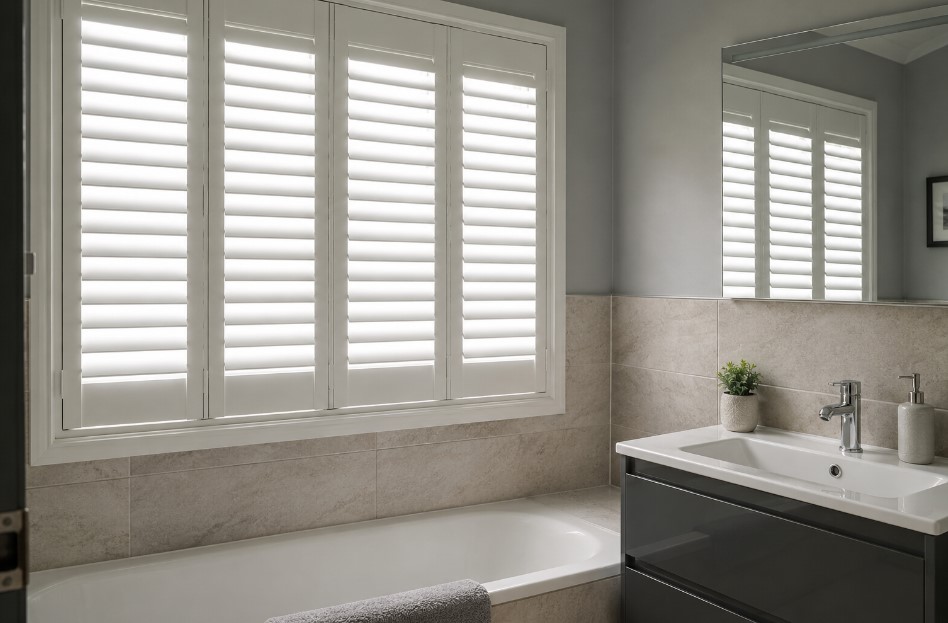
PVC composite and faux wood shutters are the most popular choice for bathroom and wet rooms in the UK—and for good reason. They look like real wood (convincingly so), they don’t warp or crack over time, and they’re available in a wide range of finishes to suit modern or traditional interiors.
These shutters handle steam and condensation with ease. They’re the sensible, cost-effective solution for most household bathrooms and kitchen windows, particularly where direct water spray isn’t a concern.
Marine-grade and fully waterproof shutters
For wet rooms and high-moisture environments, marine shutters are the proper solution. Marine shutters in the UK are built from ABS plastic or vinyl with fully sealed surfaces and—critically—stainless steel hardware throughout. Standard hinges rust; marine-grade stainless steel doesn’t. That might sound like a small detail, but it’s the difference between shutters that last a decade and ones that start looking tired within a few years.
If you’re searching for wet room shutters in the UK, this is the category to look at. They’re 100% waterproof, not just resistant to humidity, and they’re built to handle regular exposure to water without warping, swelling, or fading.
What about real wood?
Real wood shutters have their place—they’re beautiful, warm, and work brilliantly in living rooms and bedrooms. In a standard bathroom with good ventilation, solid wood can work, but it’s a risk we’d generally advise against near showers or in rooms with poor airflow. The swelling and splitting that comes with repeated moisture exposure simply isn’t worth it.
Wet room specifics: what we consider before recommending
Wet rooms require a bit more thought than a standard bathroom. The open-plan layout means water travels further, and the spray radius from a shower in a wet room is significantly wider than in a traditional shower enclosure.
Before recommending shutters for a wet room, we look at:
- Spray zones: How close is the window to the showerhead? If it’s within the direct spray radius, fully waterproof marine-grade shutters are non-negotiable.
- Fixing points: Tiling can complicate installation. A careful approach to fixings helps prevent water ingress around the frame.
- Ventilation: Good extractor fan placement matters. Even waterproof shutters benefit from a well-ventilated room.
- Louvre size and tilt: In a wet room, being able to adjust light and airflow without compromising privacy is particularly useful.
If you’re unsure which option will suit your wet room setup, we’re genuinely happy to talk it through before you commit to anything.
Kitchen shutters and real-life practicality
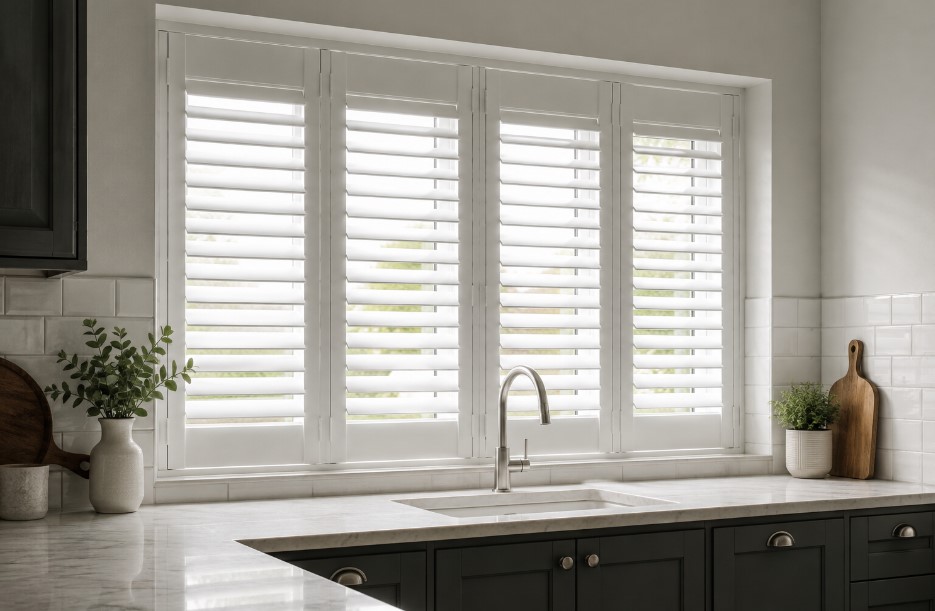
Kitchens bring their own moisture challenges—mainly steam and grease rather than direct water. The concern here is less about waterproofing and more about surface durability and easy cleaning.
PVC and faux wood shutters perform well in kitchens. Their smooth, sealed surfaces wipe clean easily, which is exactly what you want when cooking splatter is involved. One practical point: position shutters away from the direct line of steam from a hob or kettle. Not because they can’t handle it, but because repeated blasts of concentrated heat and steam over a long period will test any material unnecessarily.
Light control is also worth thinking about in kitchens. A window above a worktop can create glare at certain times of day. Adjustable louvres mean you can angle the light without blocking your view entirely.
Style choices that work in humid rooms
Humidity shouldn’t dictate your style choices. Water-resistant shutters come in a good range of finishes and configurations.
Full height shutters give a clean, uniform look from floor to ceiling (or window top to bottom) and are ideal where privacy is a priority. Café style shutters cover only the lower half of the window—useful in a bathroom on an upper floor where overlooking is less of an issue, and you want to let in as much natural light as possible.
In terms of colour, white and soft neutral finishes are timeless in bathrooms and kitchens. They don’t date, they reflect light well, and they’re easy to keep looking clean.
Your bathroom doesn’t need to look like a ship’s cabin just because we’re fitting marine-grade shutters. The materials are practical; the style is entirely yours.
Maintenance and cleaning: keeping it simple
One of the genuine benefits of waterproof and water-resistant shutters is how straightforward they are to maintain. A damp cloth is usually all it takes. Wipe them down regularly, pay attention to the louvres and hinges, and they’ll keep looking smart for years.
A few things to avoid: harsh chemical cleaners, abrasive cloths, and pressure washing (yes, it happens). These can damage even robust finishes over time.
Good ventilation is also worth a mention. Even the most moisture-resistant shutters benefit from a well-aired room. An extractor fan that actually gets used goes a long way.
Getting advice before you buy
Unusual window shapes, awkward recess depths, limited fixing points on tiled walls—these are the scenarios where a professional eye makes a real difference. Getting the measurements wrong in a wet room, in particular, can create problems further down the line.
At Art Blinds, we offer a free, no-obligation quote service. We’ll visit your home, take accurate measurements, and give you honest advice about the best option for your specific room and moisture levels. We serve Southend-on-Sea, Westcliff-on-Sea, Leigh-on-Sea, Rayleigh, Basildon, and the wider Essex area—and as a registered Luxaflex dealer with over 50 years of experience, we know our shutters.
Ready to find the right shutter for your space?
If your bathroom, kitchen, or wet room is in need of a proper window covering that can handle whatever you throw at it (sometimes literally), get in touch with us at Art Blinds. We’ll help you find the right material, style, and fit—without the pressure. Visit our showroom, give us a call, or drop us a message through our website and we’ll take it from there.
FAQs:
Are shutters suitable for bathrooms with a shower?
Yes. Water-resistant shutters made from PVC composite or faux wood handle the humidity and condensation of a standard bathroom comfortably. For showers where the window sits within direct spray range, fully waterproof ABS plastic shutters are a better choice.
What are marine shutters, and do I need them in the UK?
Marine shutters are fully waterproof shutters built with ABS plastic or vinyl bodies and stainless steel hardware throughout—designed to withstand direct and repeated water exposure. In the UK, marine shutters are most commonly recommended for wet rooms or windows positioned close to a shower. If your bathroom has good ventilation and the window isn’t in a direct spray zone, standard water-resistant shutters are usually sufficient.
Can I use wooden shutters in a bathroom or wet room?
Real wood shutters are generally not recommended for wet rooms or high-humidity bathrooms. Wood absorbs moisture over time, which leads to warping, swelling, and cracking. PVC, faux wood, or ABS plastic alternatives offer the same visual appeal without the risk.
What’s the best option for wet room privacy without blocking all light?
Full height plantation shutters with adjustable louvres are ideal. You can angle the slats to maintain privacy while still letting natural light through. Café style shutters work well in wet rooms on upper floors where overlooking from outside is less of a concern.
How do I stop mould forming around shutters?
Mould typically forms around frames rather than on the shutters themselves. Good ventilation is the most effective preventative measure—use your extractor fan regularly and allow steam to clear after showering. Wipe shutters and frames down after heavy use, and ensure fixings are properly sealed to prevent water sitting behind the frame.
Are PVC shutters really waterproof?
PVC composite shutters are highly water-resistant—they won’t absorb moisture, warp, or peel. However, fully waterproof shutters (such as those made from ABS plastic with marine-grade hardware) offer a higher level of protection and are better suited to direct water exposure in wet rooms.
Will shutters rust in humid rooms?
Standard shutters with basic metal hardware can rust in consistently humid conditions. Waterproof and marine-grade shutters use stainless steel hinges and fixings specifically to prevent this. It’s one of the most important (and often overlooked) details when choosing shutters for wet rooms.
Do you supply and fit wet room shutters in Essex?
Yes. Art Blinds supplies and fits a full range of waterproof and water-resistant shutters across Essex, including Southend-on-Sea, Leigh-on-Sea, Westcliff-on-Sea, Rayleigh, Basildon, and surrounding areas. We offer a free home visit and no-obligation quote—get in touch through our website to arrange yours.
